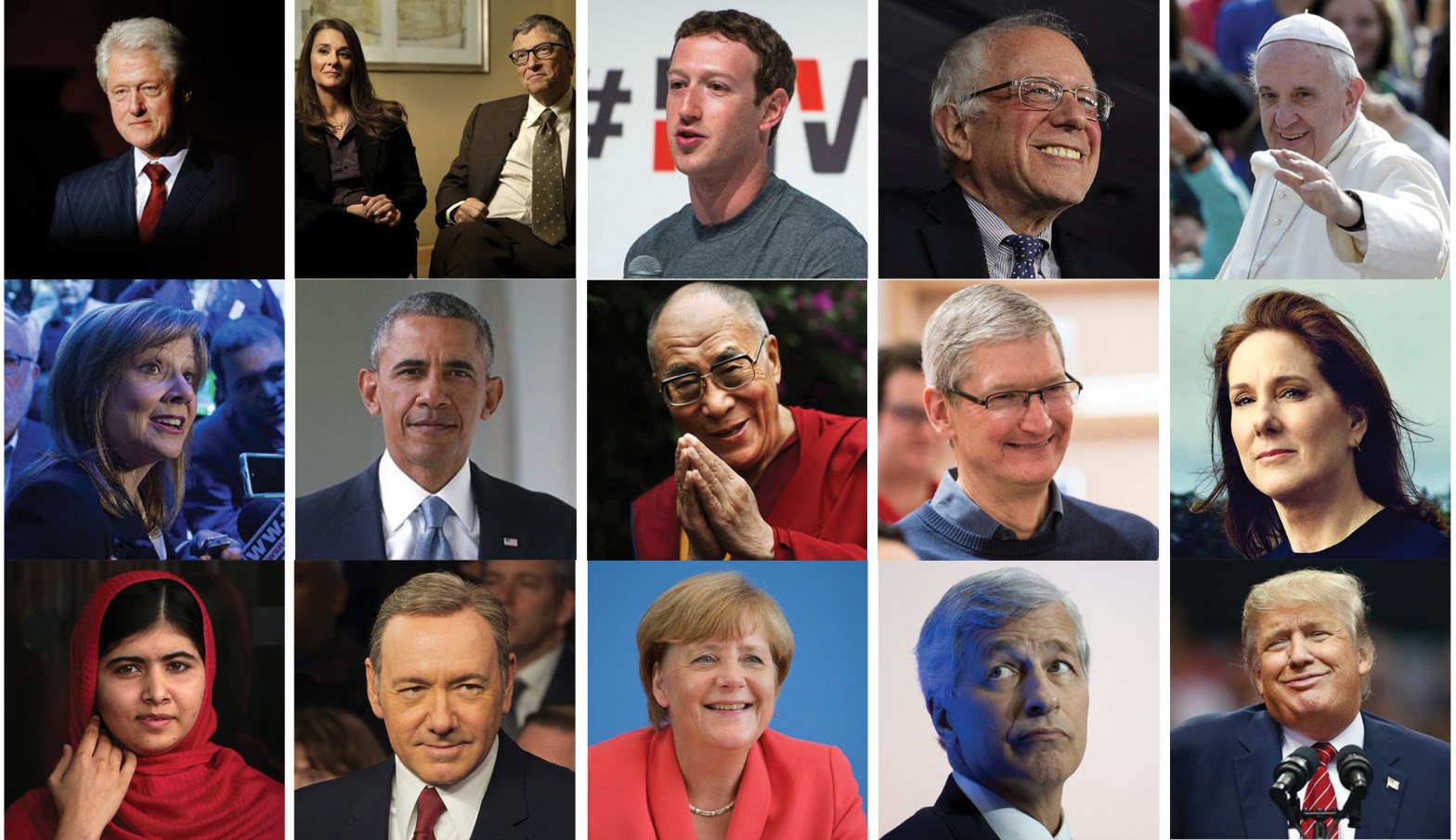
As globalisation continues to take place, the kind of leaders the world needs keep transforming and facing new challenges. As John Maxwell (1993) once said, the key aspect of leadership is influence. When leaders fail to influence, then they fail to lead.
People have generally been involved in leadership across human history, but a number of systematic leadership theories have developed in considerably recent periods of time. Over the last century, leadership models have been manifestations of top-down, hierarchical paradigms, which are astoundingly effective for an economy premised on physical production but are not suitable for a more knowledge-oriented economy (Uhl-Bien et al., 2007). Early leadership theories focused on what qualities distinguished between leaders and followers, while subsequent theories looked at other variables such as situational factors and skill levels.

The new approach towards leadership theories is Contemporary Style, where leaders’ ability to recognise surroundings and works’ complexity as well as to react in the changing environment, is necessary to perform effectively both in personal and organisational perspectives (Moodian, 2008). The contemporary theories deal with leaders’ motivations, and develop the major styles which are transformational and transactional leadership.
Transactional Leadership
The leader offers valuable things in exchange for the follower’s services, is the most traditional form of leaders-followers relationship (Ahmed, Nawaz and Khan, 2016). This comprises three components;
- Contingent Reward: As human appreciate concrete, tangible rewards in exchange of their efforts, the key indicators encompass in performance-based material rewards, direction-setting, reciprocity, and team’s confidence-building.
- Management by Exception (Active): Corresponding to need-driven change culture, this include inherent trust in workers, poor communication, maintenance of the status quo, and lack of confidence. Leaders actively assess employees’ performance and take corrective measures if needed.
- Management by Exception (Passive): Leaders avoid specifying agreements and fail in providing goals and standards to be achieved, only intervene when things went wrong (Bass and Avolio, 2004).
Transformational Leadership
Leaders grade relationships with followers very high in priority and demonstrate individualised consideration in meeting their needs for empowerment, achievement, enhanced self-efficacy and personal growth. This involves these elements:
- Idealised Influence (Charisma): role-modelling, articulation and values-creation, providing sense of purpose, meaning, self-esteem, self-determination, emotional control and confidence in followers.
- Inspirational Motivation: Leaders create vision, establish communication and manage challenging workers by encouraging, working with them and giving autonomy.
- Intellectual Stimulation: The key indicators are rationality, creativity, consensus decision-making, coaching, supporting, challenging, and involvement.
- Individualised Consideration: The fundamental elements consist of reassurance, caring for and coaching of individuals, as well as an open and consultative approach (Yukl, 2010)
Transformation leadership acknowledges individual talents and builds enthusiasm through emotional appeals, values and belief systems, while transactional leadership engenders compliance by appealing to the individuals’ wants and needs (Bass and Avolio, 2004). The combination of transactional and transformational leadership is best, because although it may be easy to augment transactional relationships, it is unlikely to replace it with transformational, since transactional leadership is also an effective motivation technique (Van Wart, 2013). However, transactional leadership is a shortcut and not as long-lasting as transformational, because the reward promised may not always be available, but leaders’ charisma will never be depleted.
Learn from The Best; Bill Gates’ Exceptional Leadership
Bill Gates leadership style is considered mainly authoritarian (autocratic), though he exhibits more than one model (Rampton, 2016). Different leadership styles can be adopted depending on the situation, however most leaders have one or two dominant styles that are noticeable the majority of the time. It is unlikely that the Microsoft’s Co-Founder would have been as successful if he only ever adopted an authoritarian style, as it tends to not be conducive to innovation as the controlling aspect of it hinders a follower’s ability to be creative.

Gates’ leadership style is often described as transformational and serves as a model for many of today’s entrepreneurs who are just as determined, focused and passionate about what they are doing. Gates provides an excellent model of how transformational qualities can help create a successful leader, but he also proves that the individual human spirit which everyone has, makes us unique, as well as the influence of parents and mentors play a critical role in creating leaders (Pressman and Lashinsky, 2019)
Leaders for The Changing World
What Gates demonstrate can be categorised as Situational Leadership, which is considered to be the most appropriate style for today’s ever-changing world. Situational leadership is based on the ‘readiness’ of the followers that the leaders need to influence, and readiness here means the ability and willingness to accomplish a job (Mullins, 2016).
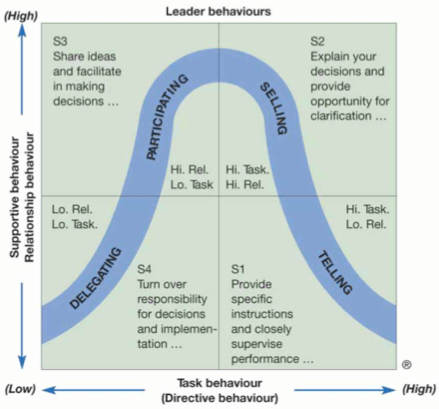
Hersey and Blanchard (1997) suggest appropriate leadership style is adjusted to their followers and abilities, and based on the combination of;
- Task behaviour: providing appropriate directions, sets goals and defines roles
- Relationship behaviour: engaging in two-way communication, listens, provides support and encouragement (Mullins, 2016)
According to Mullins (2016), what leaders need to do include ensuring suitable organisational patterns, acceptance of authority and responsibility, patterns of communication, agreement on monitoring and measurement of performance, allowing subordinate’s freedom of action, and building related reward systems.
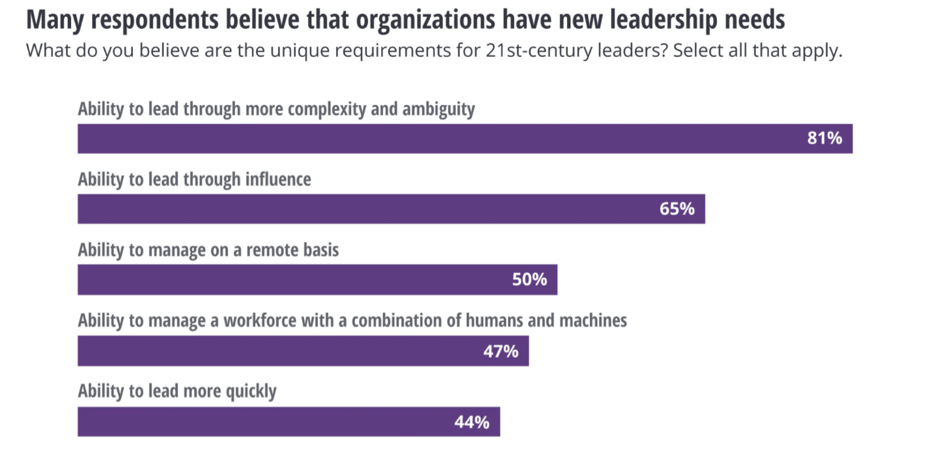
Developing leaders with suitable competencies for the 21st century requires more than self-evolution. Equally paramount is for the organisation to have the structure, culture, and management processes to cultivate these leaders. The biggest challenge revolves in the significant gaps within most organisations, which are:
- Transparency. The most valuable organisational currency in today’s world, which helps engender trust and respect. However, only 18% organisations believed they have transparent and open model, meaning that this aspect needs serious enhancement.
- Internal Collaboration. As organisations become more service-centered, leaders should shift the focus beyond their narrow towers of responsibility and work more closely with personalised approach to one another.
- Performance Management. Putting different performance indicators in place for leaders can go a long way toward establishing a culture that supports competencies such as the ability to manage uncertainty and lead through the change (Volini, et al. 2019)
To conclude, all aspects of the needs above are covered as the requirements a situational leader must possess in order to adjust with the surroundings and lead an exceptional team which eventually aim for achieving the goals and objectives set on. High adaptability, great determination, well-balanced control and power, as well as good expertise are requisite to develop world-class leaders with legendary legacy.
References:
- Ahmed, Z., Nawaz, A. and Khan, I. (2016). ‘Leadership Theories and Styles: A Literature Review’. Journal of Resources Development and Management, 16, 1-7
- Bass, B. and Avolio, B. (2004). Multifactor Leadership Questionnaire: Manual and Sampler Set. 3rd edn. California: Mind Garden
- Maxwell, JC. (1993). Developing The Leader Within You. Nashville: Thomas Nelson
- Mullins, L.J. (2016). Management and Organisational Behaviour. 11th edn. Essex: Prentice Hall
- Moodian, M. A. (2008). Contemporary leadership and intercultural competence: Exploring the cross-cultural dynamics within Organizations. Sage Publications
- Pressman, A & Lashinsky, A. (2019). Data Sheet – Why Bill and Melinda Gates Topped Fortune’s Greatest Leaders List [online] available from https://fortune.com/2019/04/18/data-sheet-fortune-greatest-leaders-gates/ [28 March 2020]
- Rampton, J. (2016). How Bill Gates Became a Leadership Legend [online] available from https://www.entrepreneur.com/article/250607 [27 March 2020]
- Uhl-Bien, M. (2011). Relational leadership theory: Exploring the social processes of leadership and organizing. Dordrecht: Springer
- Van Wart, M. (2013). ‘Lessons from Leadership Theory and The Contemporary Challenges of Leaders’. Public Administration Review,73(4), 553-565
- Volini, E., et al. (2019). Leadership for The 21st Century: The Intersection of The Traditional and The New [online] available from https://www2.deloitte.com/us/en/insights/focus/human-capital-trends/2019/21st-century-leadership-challenges-and-development.html [28 March 2020]
- Winkler, I. (2010). Contemporary Leadership Theories. Sonderborg: Physica-Verlag
- Yukl, G. (2010). Leadership in Organisations. New Jersey: Prentice-Hall
 Wardah Nafisah
Great blog. The information was explained crystal clear. I have one question for you. Do you think Microsoft could become more successful if he uses only Autocratic leadership style, just like Steve Jobs?
LikeLike
Thanks a lot! Very interesting question. I don’t think so, I’d say, since part of Microsoft’s success has been their resilience and ability to respond to changing technologies, market demands, and business opportunities (Ullman, 2018). That’s why the combined leadership style with autocratic as the dominant, that’s currently adopted by Bill Gates, is the most appropriate for the organisation’s success.
LikeLike
Hey Wardah
You have written an amazing blog on Contemporary Leadership and explained all the important aspects with clarity.
Which is the leadership style that you like the most and why? Also which is the most effective leadership style in today’s world
LikeLike
Hi Roohi, thank you so much for taking time to go through my writing. I will most probably go with Situational Leadership style, because (1) the highly transforming circumstances in today’s world need a very high adaptability to adjust our organisation well, and (2) there’s no one-size-fits-all approach for all conditions/problems, on several cases we need to be open and listen more, but on some other cases there might be needs to be autocratic. That;s why this style will be the most effective one for the changing world of 21st century.
LikeLike
Hi Wardah, I like the way you elaborate and examine aspects from Mullin that the future leader need to have.You also mentioned about high adaptability to develop a world class leader, what if in one case that the leader need to change his type of leadership but he’s not good in that new type of leadership that he need to be in that situation, what would you suggest him to do?
LikeLike
Thanks for the feedback and interesting question! I would suggest the leader to do self-evaluation to validate what requirements are not there, and figure out how to deal with it to keep the business running smoothly. Whether to keep trying and learn to suit well (but this needs some time for the process, not suitable for situation with urgent matters or speedy-decisions required), OR go bold and point out someone else who’s seen to be more capable and suitable for the style adopted.
LikeLike
Hi,Wardah,
I like your article very much, the article structure is clear, the thought is concise, the language is brief and powerful
Leadership in a changing world;
Which style will be popular as the title, the analysis of two kinds of leadership, and give Bill Gates’ leadership as a case, put forward their own opinions, how leaders do things, this is really a good article.
I have another question. If you were the leader of a public company, what would your style be?
LikeLike
Hi Emma, thanks for going through my article and pointing out things you’re interested to. As for the good question, I would most probably adopt the Situational Leadership style, with the combination of transactional and transformational style, as well as the autocratic, democratic, laissez-faire style, and use each approach for different situations happening in the company.
LikeLike
Hii Wardah,
Great Blog with amazing Information and excellent research. I would like to ask one thing. At present we had seen successful male leaders outnumbered the female leaders .
How feminine leadership is going to conquer the future world?
LikeLike
Hi Harsha, thank you so much for the feedback. Leadership nowadays has become more and more genderless, and despite the fact that most leaders are (still) male, related to a lot of determining factors including culture, the rising trend of successful female leaders is undeniably stable. I personally think that a success in leadership does not define a certain gender, because it is more about self-quality and personal development that really matter the most.
LikeLike
Hey Wardah, What a great piece of work. So well explained all the leadership styles. Also a very systematic blog appropriate use of images makes it more understandable. Can you please highlight what type of Leadership style should be considered for a start up?
LikeLike
Hi Priyanshi, thank you so much, really appreciate it! Start-up business is on the rise and highly potential these days, and it’s usually consisting of aspiring and skilful young people ready to fight and struggle. I would say Laissez-Faire leadership will be the most suitable so every potentials are optimally developed but still responsibly.
LikeLike